The Overpacked Sports Bag: What to Leave Behind
An overpacked sports bag can slow your arrival and bury useful kit. Use a short purpose-based check to carry what your session actually calls for.
An overpacked sports bag makes a simple session harder before it starts: useful kit disappears beneath gear you will not use. To pack a sports bag well, begin with the session’s purpose, then add only the items that support it. A short check at home can keep your bag easier to carry and your changing area less cluttered.
The session in question
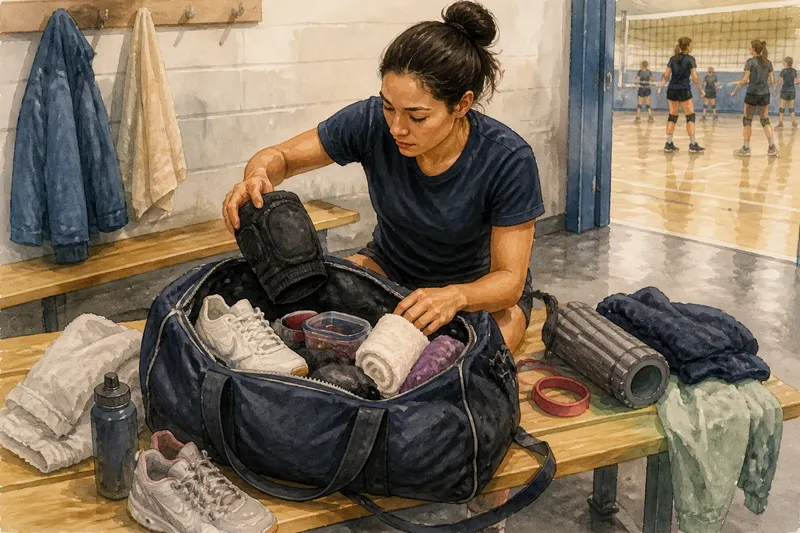
Imagine Maya is heading to a recreational indoor volleyball practice after work. She has packed the same large duffel for months, adding items whenever she remembers them: a second pair of shoes, spare knee pads, a resistance band, a foam roller, a sweatshirt, a rain shell, two towels, and an assortment of snack containers. Her actual session is straightforward: change into court shoes, warm up with the group, practice drills, and play.
At the gym, Maya spends time shifting items around to find her knee pads. The bag occupies much of the bench, and she has to decide where to put clothes that do not need to come onto the court. Nothing disastrous happens, but the extra kit has made arrival and packing up more awkward. The problem is not that any item is inherently useless; it is that most of it has no job in this particular session.
That distinction is the useful starting point. A sports bag is not a storehouse for every possible need. It is a container for the things that make the planned activity possible, comfortable, and manageable.
Give each item a job
Maya can sort what she packed into three groups: required for the session, useful for a likely condition, and present only from habit. Her court shoes and knee pads belong in the first group because they are part of how she plays. A clean shirt for the trip home may be useful if she expects to change. The resistance band and second pair of shoes are habit items unless the coach has asked the group to use them.
This is not a rule that every optional item must be removed. It is a prompt to make an intentional choice. A light layer may make sense if she will wait outside for a ride. A spare hair tie may be useful because it is small and solves a familiar annoyance. A piece of equipment that is awkward to replace may deserve space if the session genuinely depends on it.
- Session essentials: clothing and sport-specific equipment needed to take part.
- Likely-condition items: a layer or change of clothes tied to the venue, weather, or trip home.
- Small problem-solvers: compact personal items that address a known need.
- Habit cargo: gear included without a clear reason for this session.
For Maya, that means keeping her shoes and knee pads, choosing one towel, and deciding whether a dry shirt is useful. She can leave the extra shoes, roller, and band at home unless the practice plan changes.
Make a purpose-based check
A short packing check works best when it follows the activity rather than the bag’s usual contents. Maya asks herself what she will do, what she must wear or use to do it, and what conditions could change the plan. She then checks the answer against the actual items in front of her. This prevents “just in case” from becoming an automatic reason to pack another bulky object.
- Name the activity. Write or say the specific session: volleyball practice, a pool workout, a casual run, or another planned activity.
- Identify the essentials. Set aside the clothing and equipment that the activity requires.
- Check the conditions. Consider the venue, weather, changing arrangements, and how you will travel to and from the session.
- Add only useful extras. Choose compact items for a likely need, not every imaginable complication.
- Remove the leftovers. Put back anything that has no clear role in the plan.
For a sport with rules about personal equipment or a facility with specific requirements, check the relevant instructions before leaving. Maya’s team has asked players to bring knee pads, so she keeps them; she does not assume that an item required by another activity is needed here.
Why does less kit help?
What belongs in a sports bag?
Pack the clothing and equipment needed for the planned activity, plus a small number of items tied to likely conditions. A bag should reflect the session, not every sport you might play someday.
Should I bring backup equipment?
Bring a backup when a specific, plausible need makes it worthwhile and the item is easy to carry. If the session can proceed without it and you have no reason to expect a problem, leave it behind.
How do I stop the bag filling up again?
After each session, unpack items that need washing or drying and return unused extras to their proper storage place. Repack from the next session’s needs rather than carrying yesterday’s choices forward.
What if the session plan changes?
Adjust the bag when you learn about a genuine change, such as a different venue or equipment request. Do not pack for a vague possibility when you can check the plan first.
Keep the routine workable
Once Maya gets home, she removes damp clothing and used towels, then puts the unused resistance band and spare shoes back where they belong. She leaves her core volleyball items together, but not sealed inside the duffel. Before the next practice, she can make a fresh decision about any layer or change of clothes rather than inheriting every extra from the previous outing.
A simple storage arrangement can make this easier. Keep sport-specific gear in one place, such as a shelf or a small bin, and store clean clothing separately. Avoid treating the bag itself as permanent storage; forgotten damp fabric and loose odds and ends tend to turn a packing shortcut into another task later.
Maya’s next arrival is less fussy: the bag contains the kit she needs, and she can reach it without unloading unrelated gear. The change is modest, but it comes from a repeatable habit—start with the purpose, then pack to match.
Leave room for real needs
Travel and changing arrangements still matter. Someone heading straight from work may need a clean top and a place for work clothes, while a player with a long walk to the venue may choose a layer that stays comfortable on the way. Those are concrete needs, not clutter. The same item can be essential on one day and unnecessary on another.
Say Maya learns that practice will move to an outdoor court. She checks the expected conditions and the team’s message, then adds a suitable layer if it fits the plan; she still does not take the foam roller and spare shoes by default. The observable result she can aim for is a bag that addresses the changed session without absorbing unrelated gear.
When you use a sports bag, keep the purpose-based check brief enough to repeat. Name the session, identify its essentials, account for likely conditions, and remove the items with no clear job. That is how to pack a sports bag without confusing preparedness with carrying everything you own.