When Physical Education Became Part of School Life
When physical education became part of school life, movement entered the timetable—and raised questions about access, teaching, and the purpose of school exercise.
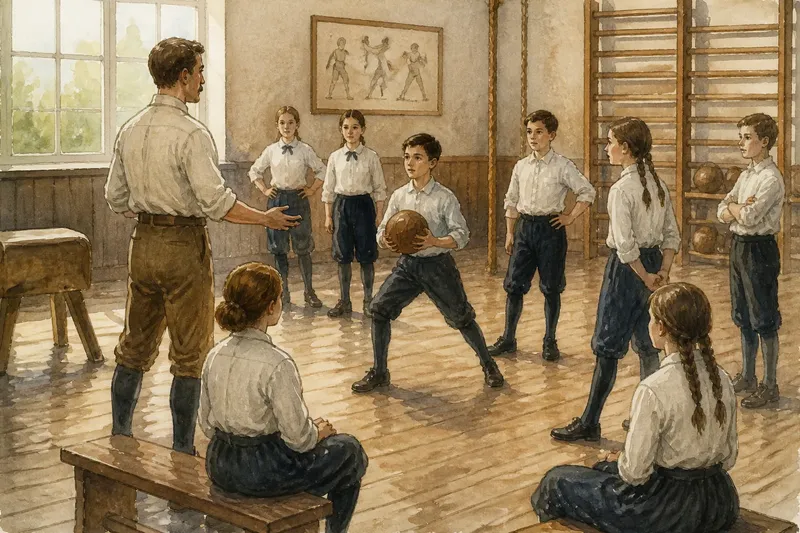
When physical education became part of school life, movement moved from the playground into scheduled instruction. In the United States, that change took shape gradually during the nineteenth century, as schools and reformers debated how exercise belonged in education.
Nineteenth-century beginnings
There was no single national starting date. School systems developed at different speeds, and classroom routines varied by place. In the nineteenth century, some American educators promoted organized exercise as part of schooling; physical education became more recognizable as a scheduled subject over time, rather than appearing everywhere at once.
That history matters because a school lesson was different from children’s informal play. A teacher could set a common time and place, demonstrate movements, and guide a group. The change did not mean that play disappeared, or that every school offered the same kind of instruction.
Exercise in school
Supporters of organized exercise connected movement with aims such as health, discipline, learning, and preparation for adult responsibilities. These were arguments made in particular educational settings, not one settled explanation shared by every school. Different approaches could emphasize formal group exercises, games, or recreational activity.
Scheduling movement made it a visible part of school routine. It also gave teachers responsibility for the lesson: they could explain rules, demonstrate an activity, and notice whether students had a way to participate. The same structure could broaden access, but a scheduled class alone could not ensure that each student felt included.
Imagine a school that has used recess for free play but now adds a teacher-led game period. The teacher explains the rules, offers a choice of roles, and pauses to invite students who have been watching to join. The expected observable result is a clearer entry point for those students, while the class still has to see whether the roles and rules work for everyone.
What changed for students
Organized lessons made participation something schools could plan for, rather than leaving it entirely to whoever found a game at recess. But the experience depended on the activity and its rules. A class could be orderly while some students waited on the edge; informal play could offer choice while leaving access to space and social groups uneven.
For a history discussion, keep the distinction concrete: a scheduled lesson creates an opportunity to teach movement, while inclusion depends on how the lesson is arranged.
Reading the historical shift?
Did physical education start everywhere at once?
No single date marks its arrival in every school. The subject took shape gradually, with timing and form varying among communities and school systems.
Was school exercise only formal drill?
No. Organized physical education could include different approaches, from group exercises to games and recreation. The balance depended on the setting and the aims educators assigned to movement.
Did scheduled lessons replace recess?
Not as a general rule. A school could add instruction while children continued to play informally at other times.
Did a timetable ensure equal participation?
No. A scheduled class created a shared opportunity, but the choice of activity, rules, and roles still shaped who could take part meaningfully.
Questions for the classroom
When comparing accounts of early physical education, check what each one actually establishes. A local school record may describe a particular timetable; an educator’s argument may express an ideal rather than prove that schools followed it broadly. Keep those kinds of evidence distinct.
- Check the place named: If an account identifies a town, state, or school system, describe the claim in that setting; if it does not, avoid presenting it as a national pattern.
- Check the date: If the source gives a year or period, tie the claim to it; if it gives no date, say the timing is unspecified.
- Check the source type: If it is a school timetable or record, use it to describe that school’s practice; if it is an educator’s proposal, identify it as an argument or recommendation.
- Check the activity: If the account names drills, games, or recreation, state which one it describes; if it says only exercise, do not assign a specific form.
- Check who participated: If the source identifies the students included, name that scope; if it does not, avoid claiming access was universal.
- Check what the source supports: If it documents a scheduled class, say that instruction was scheduled there; if it only discusses educational aims, do not treat those aims as evidence of routine practice.
These checks keep a broad subject from becoming a broad, unsupported claim.
Participation and purpose
When physical education became part of school life, the important shift was not simply from play to drills. Schools began treating movement as something that could be scheduled and taught, while educators continued to disagree about its purpose and form. The exact story depends on the place and period under discussion.
For a careful account of when physical education became part of school life, name the school system or historical setting whenever the evidence allows. That small detail tells readers whether a claim describes one school’s practice, an educator’s proposal, or a wider change.